TEFL English. Has its own Tongue

Featured

Grammar from your tongue sets the first impression for most educated folk. Your accent, mostly from uneducated folk is a determiner for them. Either way, setting you up for discriminating prejudgement or accepting you as an equal with a margin of time to work on it, is possible. It’s that instant in Northern Ireland. Prejudice is inherent in their culture and therefore mentality. Its source is suspicion and mistrust of outsiders. That’s just how it is in some parts of the UK. How to spot the pre-judger or the psycho-analyser is also on my menu. Either way, both are hostile and can be from an individual company or even a whole town/village as many have found in parts of the UK. So learning the native language in my belief should equip you with a matching skill of those who seem to have the upper hand as you pursue your new life. We all have our difficulties. Prejudgers and analysers are universally folks with hang-ups even against those of their own communities and indigenous. So don’t take it personally. But do learn to spot them and avoid spinning your wheels with them, which will have a long term improvement on your mental health. A hostile orientation in our growing multi cultural environment is not tolerated universally, though significant and it’s my intention to begin with some of Northern Ireland’s employers.

Unfortunately, some parts of the UK has not reached total protection against some discrimination like Ageism-Ethnicity and yes, even gender: conversely as the USA-Canada and other merging democracies advance on this theme, age continues to be top of the hang-up list. More noticeably a preference in some parts from empowering women even at the expense of their male colleagues and company profits. This can lead to lower revenue because of some promoting underqualified females for recruitment management where reports show empowerment as politically or culturally correct. though counterproductive. Because this often hidden growing cultural agenda is either coercive and therefore imposed, it is rarely talked over at the interview with some idea they are trying to outsmart the candidate. This is usually a big mistake, and most savvy candidates can sense what not to discuss. Besides, a savvy candidate will take in the company landscape whilst there. Good companies should bring to the attention immediately to all candidates, allowing the right to proceed or respectively decline. But this is not the US or Canada or even far eastern countries where all sorts of agencies have a better bearing on it. As a result, qualified males are often overlooked because of it. Northern Ireland, a model for this, isn’t exactly pulling the international brigade to their shores given this risky development. Protection based on the ethic ‘better candidate for the position’ must have done a reversal. Naturally gender plays a part and this can easily be monitoured and controlled, as is by a federal government in the US for example. They send an agent to cross-reference a corporate organisation’s hiring history of gender-age=ethnicity. This model does not come close to imposing protective legislation in the UK and often continues unabated. Reports show that this is particularly acute in NI.

English has its own tongues

SPEAKING AMERICAN

A History of English in the United States

By Richard W. Bailey

207 pp. Oxford University Press. $27.95.

In “Speaking American,” a history of American English, Richard W. Bailey argues that geography is largely behind our fluid evaluations of what constitutes “proper” English. Early Americans were often moving westward, and the East Coast, unlike European cities, birthed no dominant urban standard. The story of American English is one of eternal rises and falls in reputation, and Bailey, the author of several books on English, traces our assorted ways of speaking across the country, concentrating on a different area for each 50-year period, starting in Chesapeake Bay and ending in Los Angeles.

We are struck by the oddness of speech in earlier America. A Bostonian visiting Philadelphia in 1818 noted that his burgherly hostess casually pronounced “dictionary” as “disconary” and “again” as “agin.” William Cullen Bryant of Massachusetts, visiting New York City around 1820, wrote not about the “New Yawkese” we would expect, but about locutions, now vanished, like “sich” for “such” and “guv” for “gave.” Even some aspects of older writing might throw us. Perusing The Chicago Tribune of the 1930s, we would surely marvel at spellings like “crum,” “heven” and “iland,” which the paper included in its house style in the ultimately futile hope of streamlining English’s spelling system.

A challenge for a book like Bailey’s, however, is the sparseness of evidence on earlier forms of American English. The human voice was unrecorded before the late 19th century, and until the late 20th recordings of casual speech, especially of ordinary people, were rare. Meanwhile, written evidence of local, as opposed to standard, language has tended to be cursory and of shaky accuracy.

For example, the story of New York speech, despite the rich documentation of the city over all, is frustratingly dim. On the one hand, an 1853 observer identified New York’s English as “purer” than that found in most other places. Yet at the same time chronicles of street life were describing a jolly vernacular that has given us words like “bus,” “tramp” and “whiff.” Perhaps that 1853 observer was referring only to the speech of the better-­off. But then just 16 years later, a novel describes a lad of prosperous upbringing as having a “strong New York accent,” while a book of 1856 warning against “grammatical embarrassment” identifies “voiolent” and “afeard” as pronunciations even upwardly mobile New Yorkers were given to. So what was that about “pure”?

Possibly as a way of compensating for the vagaries and skimpiness of the available evidence, Bailey devotes much of his story to the languages English has shared America with. It is indeed surprising how tolerant early Americans were of linguistic diversity. In 1903 one University of Chicago scholar wrote proudly that his city was host to 125,000 speakers of Polish, 100,000 of Swedish, 90,000 of Czech, 50,000 of Norwegian, 35,000 of Dutch, and 20,000 of Danish.

What earlier Americans considered more dangerous to the social fabric than diversity were perceived abuses within English itself. Prosecutable hate speech in 17th-century Massachusetts included calling people “dogs,” “rogues” and even “queens” (though the last referred to prostitution); magistrates took serious umbrage at being labeled “poopes” (“dolts”). Only later did xenophobic attitudes toward other languages come to prevail, sometimes with startling result. In the early years of the 20th century, California laws against fellatio and cunnilingus were vacated on the grounds that since the words were absent from dictionaries, they were not English and thus violations of the requirement that statutes be written in English.

Ultimately, however, issues like this take up too much space in a book supposedly about the development of English itself. Much of the chapter on Philadelphia is about the city’s use of German in the 18th century. It’s interesting to learn that Benjamin Franklin was as irritated about the prevalence of German as many today are about that of Spanish, but the chapter is concerned less with language than straight history — and the history of a language that, after all, isn’t English. In the Chicago chapter, Bailey mentions the dialect literature of Finley Peter Dunne and George Ade but gives us barely a look at what was in it, despite the fact that these were invaluable glimpses of otherwise rarely recorded speech.

Especially unsatisfying is how little we learn about the development of Southern English and its synergistic relationship with black English. Bailey gives a hint of the lay of the land in an impolite but indicative remark about Southern child rearing, made by a British traveler in 1746: “They suffer them too much to prowl amongst the young Negroes, which insensibly causes them to imbibe their Manners and broken Speech.” In fact, Southern English and the old plantation economy overlap almost perfectly: white and black Southerners taught one another how to talk. There is now a literature on the subject, barely described in the book.

On black English, Bailey is also too uncritical of a 1962 survey that documented black Chicagoans as talking like their white neighbors except for scattered vowel differences (as in “pin” for “pen”). People speak differently for interviewers than they do among themselves, and modern linguists have techniques for eliciting people’s casual language that did not exist in 1962. Surely the rich and distinct — and by no means “broken” — English of today’s black people in Chicago did not arise only in the 1970s.

Elsewhere, Bailey ventures peculiar conclusions that may be traceable to his having died last year, before he had the chance to polish his text. (The book’s editors say they have elected to leave untouched some cases of “potential ambiguity.”) If, as Bailey notes, only a handful of New Orleans’s expressions reach beyond Arkansas, then exactly how was it that New Orleans was nationally influential as the place “where the great cleansing of American English took place”?

And was 17th-century America really “unlike almost any other community in the world” because it was “a cluster of various ways of speaking”? This judgment would seem to neglect the dozens of colonized regions worldwide at the time, when legions of new languages and dialects had already developed and were continuing to evolve. Of the many ways America has been unique, the sheer existence of roiling linguistic diversity has not been one of them.

The history of American English has been presented in more detailed and precise fashion elsewhere — by J. L. Dillard, and even, for the 19th century, by Bailey himself, in his under­read ­“Nineteenth-Century English.” Still, his handy tour is useful in imprinting a lesson sadly obscure to too many: as Bailey puts it, “Those who seek stability in English seldom find it; those who wish for uniformity become laughingstocks.”

YOUR ENGLISH GENRE,

KNOW YOUR TENSES AND GRAMMAR

NOVEL INSIGHTS BY WAY OF MY VIDEOS

Image

Paste a Video URLWIN 20191224 00 43 52 Pro      https://youtu.be/keNqWSKLBvU

Derna Travillian, well camouflaged, lies in wait from a sniper’s hide up an oak tree trying hard not to move from discomfort. After a test-run, she does another three-sixty degrees pan across the green patchwork of fields. A rainbow touches down where she came to rest her telescopic sight. Every now and again she checks the vegetation for changes by checking the foliage. Picking-off members of the security forces is not every woman’s idea of the good-life at fifty-something. But she is the best. Fuck knows who trained her though, said a voice from someone.. Finally, to relieve herself, she takes a leak from a squat position, unlike her male colleagues who only have to roll over on the other side of the field and stand. They’re her support, just in case. Fermanagh her rustic mare below releases her bladder without as much fuss. She spits spent gum down at her for the hell of it. It feels like early spring though like last night, snow is to return by evening. She remembers as a child riding in the same fields, although greener then. Unlike today less green and muddier from the tracks of Fergusons and covert operations. Jackdaws squawk in the scope taking flight. She bites a quill feather between her teeth, which helps her focus and the kill is now on. It means going through with her final contract although her agent is yet to know of it. Contracts are how her employer prefers things. Each liquidation needs recorded and ratified once completed. That’s the job of her support. She crosses her forehead and chest, saying a few words to Mary before a hack of spit, then spat. The other Mary, the one she talks too, took over.

Mischievous Jackdaws are a small distraction, not that you have anything against them. Birds are welcome, knights of the realm are not, eh?. She rolls her weight sideways before getting comfortable then scans the grass where it grows longer. She checks for topography changes. All good. She turns back into position. She wanted the trouble of erecting a large camouflaged hide, which she made from branches and twigs plus two branches for stability alongside.. The length of her body from each angle enabled her less seen from the air also. A savvy army sniper would know where vegetation mixes right and where it wouldn’t. The Britshave been combing the border nigh on two years and still have no idea how she wriggles out of their dragnets. She even taunts them with unwrapped gum. Eat this, Limey. A father’s voice spoke to her when about to take a life. As though the oak contained his voice, a tear fills her left eye not only from melancholy but a genetic trait called glaucoma inherited from her mother; so she has been told. But she has other ideas. It is near the end of a campaign, why less cautious now, he would say. In her scope, the hue from the winter rainbow creeps over the pasture. Light is dimmer there when a silhouette throws a cloak as though to shield preying-eyes from seeing. It is all it took as she willed her father’s lament away.

Surmising a RUC vehicle and not army coming, she should not have the same difficulties escaping. The Brits train their boys to spot differences in topography and even vegetation though they often overlooked certain trees. RUC boys could not spot the difference between a bull or a cow’s fecking arse. Music sings in her head as she lowers her telescopic crosshairs onto her imaginary officer McDowell’s head, whose doom is certain from a field in county Fermanagh. How we have to get it together,she murmurs squeezing the trigger. Allow five for trajectory, five for distance, and another for crosswinds. The sound of the piano, if she could hear it, enables her focus to narrow in.A pre-recordedShostakovichhit a low note from a hidden tiny Walkman attached to her right ear.A smell of cow manure wafts from the nearby hilltop where a farmer closes his gate. She stretches her positioning to all fours: Herr Steiner’s training rings in her head.Without stability, probably still in mobility. She pins the contract into the tree’s flaky bark with a Gaelic Hairpin. Then she rests the barrel onto the branch in front for the final deadly focus. Covered by woodland from behind and to her right and left she feels confident any sudden cracks within would dissipate through it. Her aim is steadier. She tests it to see if it is steady enough. Fermanagh senses it is time for Stum.

One two three and squeeze-one two three and squeeze-allow for a little jump, down a tad more, all in one flow, hold, hold, hold, relax. Smile to yourself, countess.Still feckin’ good, bitch.’ [Stum/Silent]

Her ego pump is short-lived. The squeal from the RUC defender comes piercing through the otherwise calm. She could not shake the thought of Vincent’s cadet whom he hid from harm’s way. Maybe the group is right about her alignment. This would surely seal it between them both for good. Dead love, hello again, sorry my love, nothing personal.

The quill, chewing gum, only a few know, with thelast resort, Walther, who she is for identification purposes: Even she doesn’t know them beyond a few Fuck-buddies and soon one dead love. Light enough holding to the head for its single stock, little did they know about her work, the contracts, or even young McDowell and the hate boiling in her contractor’s blood? Not contempt for him. But whom had seeded him from the ball-bag of his nemeses he despised more everyday. Uglier these days, and this day she has something to prove. Truth is, she is burnt out. Doubt about her commitment to the cause of republicanism, lately an issue at the castle. What is more, of all the ideals, she never felt shrinkage from, except this lastfecking son of a pig farmer. After all these years of commitment, she actually loves another in the same uniform her cross-hairs centred on. How can this be, Mary? His voice, resonating more than ever, his velvet tipped tongue and its concealed edge when speaking no other possessed. It made up for all the other stuff like his awkwardness during love-making. Even cooking which he was content with in spite of its part in their foreplay. He was a challenge, not like the others. Love is different at fifty-something when it seldom comes along.How could she have foreseen it with him? When it does, the mind tends to look further ahead more frequently and see things you could not at twenty-something. Also, a lonely wealthy Irish Countess with no one to share it is as intolerable as the source of her loneliness. Is this what they mean when you are desperate. I need a hiatus. Time for me-me-me. Then there are those other feelings, racing around what little shame or conscience she has left to herself. Moreover, the same question, If he knows what I had done this day, could he forgive me for this too.Somehow, Mary can seehe might. Her intuition said this one is strangely forgiving toward her. Many times his forgiveness she had taken for granted. However, this, she has a choice with. She sees the defender turn the corner where the wooden fence opposite curves outwards toward the field of grazing Frisians. Their carbon from breathing rises like smoke signals. Officer McDowell laughing with his colleagues comes closer in her scope. Every time she looks at him, she tries to see only him. His smile. No wonder he sent him south; fecking well looks like him. Shit, why this feckin’ uniform, Derna, why why why?

Mary cannot see the difference. RUCpersonnel shouldn’t feel any different from a Brit. Came with the turf, ‘Not one of those bastards could prove different; their sins will always be, ‘Le Péché Terrible’. Herr Steiner, though German, loved French. But what would he know of us, says you? Mary.

Shielded by an English judicial system in the land of her murdered father, what did they expect? Today, those convictions Derna has been trying burying over the last years, but, as planned, Mary will not permit it. To make matters worse, this one is not like the others: Too close and in an odd way, too easy.Who is he anyway, that knows me so well, Mary?Maybe when twenty-something without a conscience, but at fifty-something the enemy has hit the soft spot. Moreover, it went deep. That is not supposed to happen. Mary thought often on the matter. Despite the denial, her head at fifty-something, is not the same as it was at thirty-something: Men all over her then, but today, mostly all dead or incarcerated. Better to forgo this one, Mary, something isn’t right.

Hard as it is, Derna fixes the cross-hairs on her quarry’s forehead and a scene from last summer threw something at her in a flash. Exquisite, that dark crystallize green canal they sailed together. She almost allows the joy to get to her. The barge meandering, slowing it here and there, her pointing out places of interest with either the oar or her finger. Soon they were caught in a current and then deep into the glens and lakes allowing the butterflies to partake of the love. With a chorus from the assortment of birds, he poured her a cup of English tea in blissful transformation. Not a brew he is a custom too, but she was. The morning has been ecstasy and for a change, the effect on her was what she needed after another contract. She would not have it any other way, even with a man of uniform at her side.

What are you thinkin’ about, Mary?”

Makin’ love on yon embankment among the buttercups.”

S-I yon/that/over there/distant bank etc

Vincent McGovern thought about it, even out of uniform he felt he still wore it with her. She lied to him and he said nothing of it.

Could we wait till the surroundings are more to my liking, darlin’?” he said allowing her to save face.

What did you think; jumpin’ yer bones or sumpin’? she said trying to hide behind another disarming smile.

You can if you can manage it,”

Now yon’s a challenge.”

More than you can imagine, darlin’,”

She tosses her long locks over her left side enabling her right eye to flirt.“You don’t know my imagination, Vincent?”

Care to bet on that.”

Cutting it today is going to be hard. She just needs to work on getting her head around the one annoying me myself shite. There is no doubt; Officer McDowell is like a younger Vincent McGovern.

Oh, why do you torment me?An image of him in his leaf coloured uniform lingers long; too long and she fears it. She lowers her head to aim one last time with her camouflaged Mauser. And there he is. Cross-hairs centers his uncapped forehead.Ready to die my love… Sorry.

One two three, squeeze. One two three, Derna engages the magnum, slotting it into the chamber: Her mare takes off in gallop towards the woods after sensing something she could not fathom.

A sound of indescribable proportion could have been mistaken for something not of this environ. It followed a sway,followed by shaking the earth beneath the oak. Her heart pounds at her chest, her hand clasping at whatever she could before her body tumbles downward. It made no difference. Refocusing her eyes to make sense of what is desperately out of place, an explosion, a minuscule of a second before blasts her out of the branches. All around her, pieces of tarmac, pebbles, brick and stone peppers her. Grit embedded itself in her hair and inside her ears. Her Mauser blown against the tree is shattered pieces, like her newfound alignment. Remarkably, blown from the tree before part of the Defender’s windscreen mesh embedded itself where she took position a moment before. Just when all seemed final, something rolls out of the branch above and with one ugly hallow sound of impact against the tree’s trunk. A head holds Derna in shock like none other.

Caged

For me myself, it was a simple enough rule from an eighteen-year-old. No, If’s and no But’s…you snitch, you loose more than you can afford starting with your pocket-money. The rule is, make sure you don’t or you will get a kicking and your sister gang-banged. Then big Uno, ‘formely Geordy’ comes along and says while handing myself a tenner...’Some rules are meant to be broken, mate.’ Then he saysBesides, yon wanker here doesn’t know his forearm from his foreskin’. But the rule was really from his old man, one of them Hoods in the middle who carried a piece, like Doey’s. Now who would you allow to lead us according to Doey’s natural selection theory.

After the Ballbeen Loyalist disturbance is successfully subdued.

12-30 amGlasgo,a sixteen-year-old going on 17, is arrested by the Brits, bleeding, bruised and crushing under others bigger than he. In addition, he should not be in an army Saracen with a wound. Interned is not the best time when the vigilantes needed every man. His Piss and Miss, as he calls them, wait until theyhear. The distant republican bombs from Belfast seem to be getting closer with each day to the loyalist strongholds of the east. Major Braithwaite, a British Officer, sent to quell the civil unrest, knows how vital defensive maneuverings are to them. It did not stop some of his men exploiting their captive’s fears. In addition, without informing the RUC, and it wasn’t going to stop the Major from pushing ahead to leverage his own designs to the loyalist detriment. Sixteen-year-old Glasgo will form in his conscious mind as a possible opportunity.

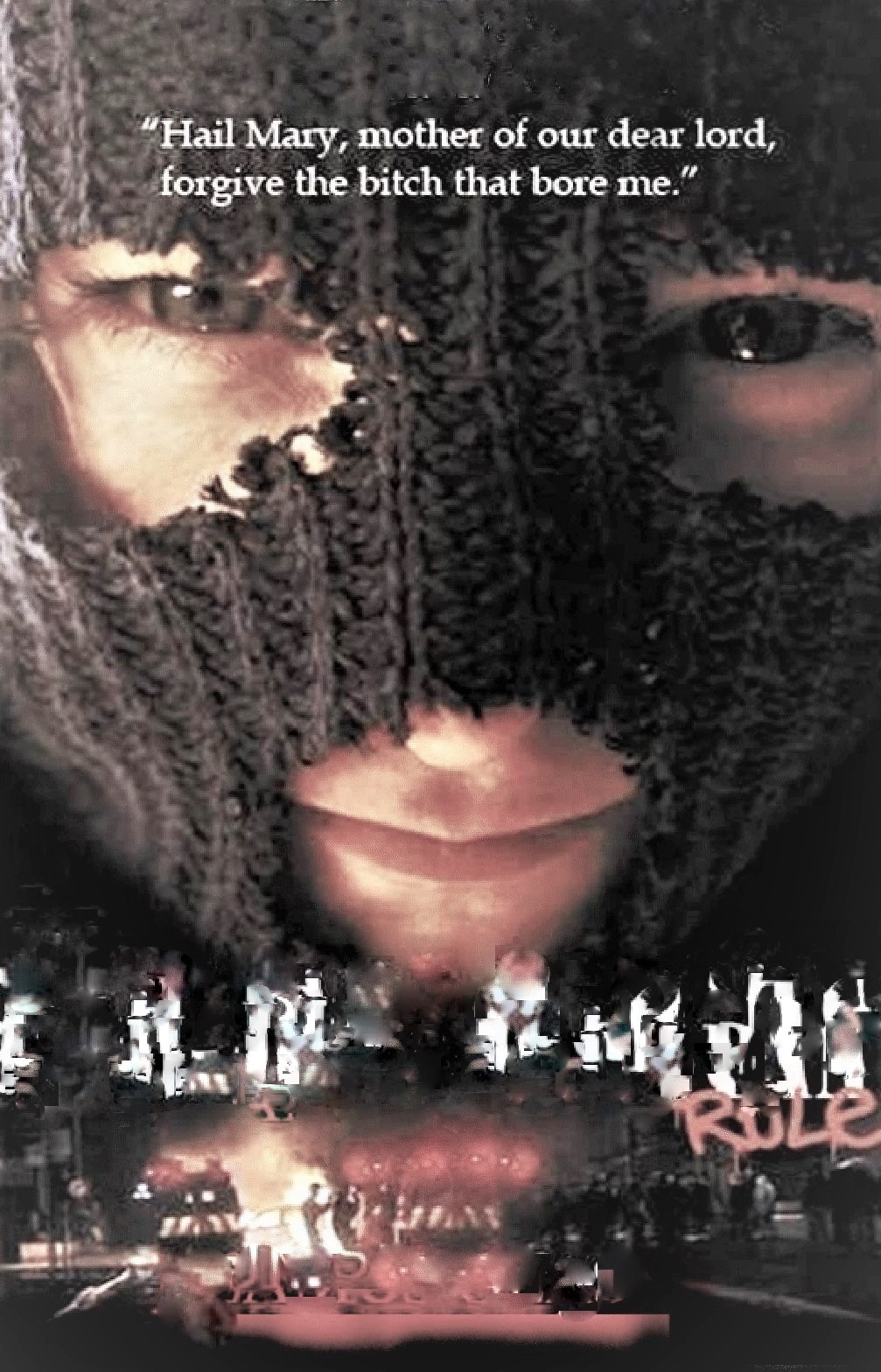
A BOLDER TARTAN rule

Derna

Chapter1


That a bitch could walk into his life and climb under his skin like that, try it for size and wear him out; well what do you think? They said Vincent McGovern is not like the others; it would be best to get away before it all goes south. Who knows him like that anyhow? Savvy to know him that well? Me! Don’t think so, bitch that I am.

Derna Travillian lies spreadeagled and camouflaged in a snipers fly up an oak tree without moving. Even to relieve herself. Fermanagh, her rustic mare, shifts his weight quietly beneath each time nature calls. She spits her spent gum down at him for the hell of it. It feels like early spring, she remembers as a child riding in the same field. It was green then, today the same, apart from tracks of large tractors. Birds in the scope take flight when spooked. She bites a feather between her teeth, which helps her focus. It also means going through with her contract. She cross her forehead saying a few words to Mary, then again spits.

Mischievous jackdaws nearby are only a small distraction. Not that she has anything against birds. Birds are welcomed; knights of the realm are not. She throws her weight sideways, scans the grass where it grows longer. She checks for topography changes, all good. She rolls back into position. A contract is a contract. She did not want the trouble of erecting her camouflaged fly, which she did anyway, enabling her less seen from the air. The Brits had been combing the border now on two years and still has no idea how she made it out of their dragnets. She even taunted them sometimes, with her spent gum. Nevertheless, this is near the end of a campaign and why now any less cautious. She could hear her father’s voice speak to her, as though the oak held him within. Then she notices in her scope the hue from the winter dusk creep over the pasture. The light grew dimmer there. It’s all it took.

Rationalizing it an RUC vehicle and not army, she would not have the same difficulties to escape. The Brits trained their boys to spot differences in topography and even vegetation. RUC could not spot the difference between a bull and stallion’s arse.   Music rose in her head as she lowered her telescopic sight onto Officer McDowell’s head, whose doom is certain from a field in county Fermanagh. How we have to get it together reached a crescendo from her Sony recorder. She squeezes the button. Allow five for trajectory, five for distance, and another for crosswinds. The sound of the piano, if she could hear it, enables her to focus sharper. Shostakovich’s Piano piece hit a note. The smell of cow manure wafts by from the nearby hilltop. She stretched her positioning to all fours. That’s more like it. Without stability, you are probably still in mobility. Herr Steiner’s training rang in her head. She pins the contract into the tree’s flaky bark with a Gaelic hairpin. Then she rests the barrel onto the branch for deadly focus.

Covered by woodland from behind to her right and left she felt confident any sudden cracks within would dissipate through it. Her aim is steadier. She tested it to see if it is steady enough.  One two three and squeeze… one two three and squeeze… allow for a little jump, down a tad more, all in one flow, hold, hold, hold, relax. Smile to yourself, Countess. ‘Still feckin’ good.’  Delight is short lived. The squeal of the RUC defender pierces the otherwise calm. She still could not shake off the thought Vincent’s cadet, who he hid from harm’s way. Maybe the group is right about that alignment of hers. This would surely seal that fate between them both forever. Dead love, hello again.

The grouse feather, chewing gum, only those extremely close to her knew she carried in her purse, along with the walther: light enough to hold to the head. Little did they know about her work, or the contract, even young McDowell from the hate boiling in her contractor’s blood? Uglier these days, though this day she has something to prove, doubt of her commitment to the cause of republicanism, lately an issue. Of all the ideals she had notched up, she never felt shrinkage from any except maybe this last feckin son of tinker’s brat. What is more, after all these years of commitment, she actually loves another in the same uniform as the one her crosshairs centers on. His voice, resonating more than ever, his velvet tipped tongue no other possessed. It made up for all the other stuff, his age, his old ways, and not forgetting the old uniform.  He was a different, not like the others and after all, love is different at fifty-something when it seldom came along. How could she have foreseen it? When it does, the mind tends to look further ahead more frequently and see things you had not seen at twenty something. In addition, a lonely wealthy Irish Countess with no one to share it with is as intolerable as the feelings from its source. Feelings that recently race around what little conscience she had left to herself. Moreover, the same question, ‘if he knew what I had done this day, would he forgive me for this too.’ Somehow, she could see he might, her intuition said this one is strangely different. Many times his forgiveness she had taken for granted. However, with this she has a choice. Finally, she could see the defender turn the corner where the wooden fence opposite curves outwards toward the field of grazing Friesians. Their carbon rose above the herd like a smoke screen. Officer McDowell laughing with his colleagues came closer in her sight. Every time she looks at him, she tried to see only him. No wonder he sent him south; fecking well looks like him.

 Shit, why this feckin’ son of a tinker?

 RUC personnel should not feel any different from a brit. Came with the turf, not one of those bastards could prove different; their sins will always be,

Le péché Terrible. Her Steiner again, though he is German.

 After all, shielded by an English judicial system on the land of her father, what did they expect? Today, those convictions Derna had been trying harder burying over the last years. To make matters worse, this one is not quite the same as the others. Too close, too easy. Maybe when twenty something without a conscience, but this time, at fifty-something, the enemy had hit the soft spot. Moreover, it went deep. That is not supposed to happen. Despite denial, her head at fifty-something is not the same as it was once at thirty something. Men all over her then: Today they are mostly all dead or incarcerated.

Derna fixed the crosshairs of her anti shimmer sight and a scene from last summer threw a flash at her. Exquisite, that dark clear green canal they sailed together. She almost allowed the joy to get to her. The barge was meandering, slowing it here and there, and pointing out places of interest with either the oar or her finger. Soon they were floating deep into the glens and lakes allowing the butterflies to partake of the love that carried them. He poured her a cup of English tea. Not the brew he is accustom too. The morning had been bliss, and for a change, the effect it had on her was what she needed, after a high maintenance contract. She pondered; she would not have it any other way, even with the foe at her side.

“What are you thinkin’ about, Mary?”

 “Makin’ love on yon embankment.”

 McGovern thought about it. Even though out of uniform, he felt with her he still wore it. She lied to him. And he knew.

 “Could we wait till the surroundings are more to my liking, darlin’?”

 She said hiding her true wish behind another disarming smile.

“Of course, what did you think; I was goin’ to rape ya or sumpin’?

 “You can if you can manage it,”

 “Now yon’s a challenge.”

 “More than you can imagine, darlin’,”

 “You don’t know my imagination, Vincent,”

 “Care to bet on that, Mary.”

 Cutting it today is going to be hard. She just needs to work on getting her head round the one annoying me myself stuff, and that feeling. There is no doubt; Officer McDowell is awful like a younger Vincent McGovern. The picture of him in his leaf coloured officer’s uniform lingered. Mary lowered her head this time to take aim along her camouflaged Mauser and there he is. The crosshairs rounded dead center on his forehead. Uncapped and clear as a bell, ready to die. Sorry my love.

One two three, squeeze. One two three, as Mary engaged the magnum, her mare took off in a fit of hysterical gallop towards the woods.

A sound of indescribable proportion could have been mistaken for something not of this world followed by a sway that shook the earth beneath the oak. Her heart pounded at her chest, her hand clasping at whatever she could, before her body tumbled downward. But it made no difference; her eyes trying to make sense of what seems desperately out of place, when the blast, a miniscule of a second before the fly, is out of the branches. All around her, pieces of tarmac, pebbles, brick, and stone peppered her. Pieces of stone had embedded her hair and even inside her ears. Her Mauser blown against the tree is now shattered pieces, like her newfound alignment. Remarkably, blown from the tree before the defender’s mesh had embedded itself where she took position a moment before. Just when all seemed final, a head rolls out of the branch above and with one ugly hallow sound of impact against the trees trunk, it held Derna in a shock like none other.

Link

Such sounds. Only for your ears Glasgo.

A sixteen year old Belfast youth tormented by home abuse finds temporary solace escaping the violence only to find violence outside the home.

Glasgo, tired of being disenfranchised, seeks the company of his friends in east Belfast at time of looming civil war between the protestant loyalists and Irish republicanism. With nativity and boundless energy he goes off to have what most youths from the Irish divisions in the seventies wanted. Risque sex and devil may care attitude skirting the perimeters of the powerful paramilitaries. But  soon they are on the radar of some unsavory Paras, who are sniffing out plants amid their own ranks.  When Angel, big Georgy and Glasgo have made amends to appease their dangerous slip-ups, they find not all things are that kosher with some off their antagonists.

http://www.4men2visit.com

The Bold Tartan

Normal
0

false
false
false

EN-US
X-NONE
X-NONE

/* Style Definitions */
table.MsoNormalTable
{mso-style-name:”Table Normal”;
mso-tstyle-rowband-size:0;
mso-tstyle-colband-size:0;
mso-style-noshow:yes;
mso-style-priority:99;
mso-style-qformat:yes;
mso-style-parent:””;
mso-padding-alt:0cm 5.4pt 0cm 5.4pt;
mso-para-margin:0cm;
mso-para-margin-bottom:.0001pt;
mso-pagination:widow-orphan;
font-size:11.0pt;
font-family:”Calibri”,”sans-serif”;
mso-ascii-font-family:Calibri;
mso-ascii-theme-font:minor-latin;
mso-fareast-font-family:”Times New Roman”;
mso-fareast-theme-font:minor-fareast;
mso-hansi-font-family:Calibri;
mso-hansi-theme-font:minor-latin;
mso-bidi-font-family:”Times New Roman”;
mso-bidi-theme-font:minor-bidi;}

A village near Belfast. An innocent riot. A guilty graveyard and for a while Hell for me beneath it. A dribble of red messed the shine on the hospital floor. Funny, no pain, yet. The tartan could hold no more of my blood.


“Nurse, I need bandaged, Quick!”


“Breathe easy, won’t be a moment,” she said.

 I’m sixteen and a hard man. I can take it more than most.


An account of true events set in the early nineteen seventies.


I know them to be true, because I am there, once again, reliving it you could say. It is November 1973; that’s Bowie’s ‘Queen Bitch’ playing from a bedroom. There’s talk of civil war around the village too. Even an operative ‘RA’ cell preparing to car bomb the fuckin’ heart of our wee village, is in town they say. Blood from my slashed hand is dripping off the tips all my fingers. Yet no pain. Mustard it is, not feelin’ pain. Give me pain; I prefer it. That way I know I’m okay.  From the knife fight I just had with a Taig who came looking for our acquired ford van. We hid it in a field. He tried to run.  I’m known for that shit. Haven’t much time. They usually call the Fuzz when we turn up here. Known around here as Glasgo, I have a story for ya. Oh and this is not one of those whimsy tales for those who are hoping for some breathin’ space or an attempt to be a local hero. Me, well I just wanna remember, okay. Record its importance you could say. Be warned though, tis a true story of hard men and violence. The hardest men I will ever know. Most of them will not live beyond the troubles. There is something else, shit, now its hurtin’. But it was beyond me then, still is. So hang in there. You think things are mustard crazy today. Maybe, or maybe nah, not like then, not with these fellas, I’ll tell ya. ImageImage